
Categories
EducationPublished October 28, 2026
Día de Muertos in Mexico: The Story Behind La Catrina and a Celebration of Life

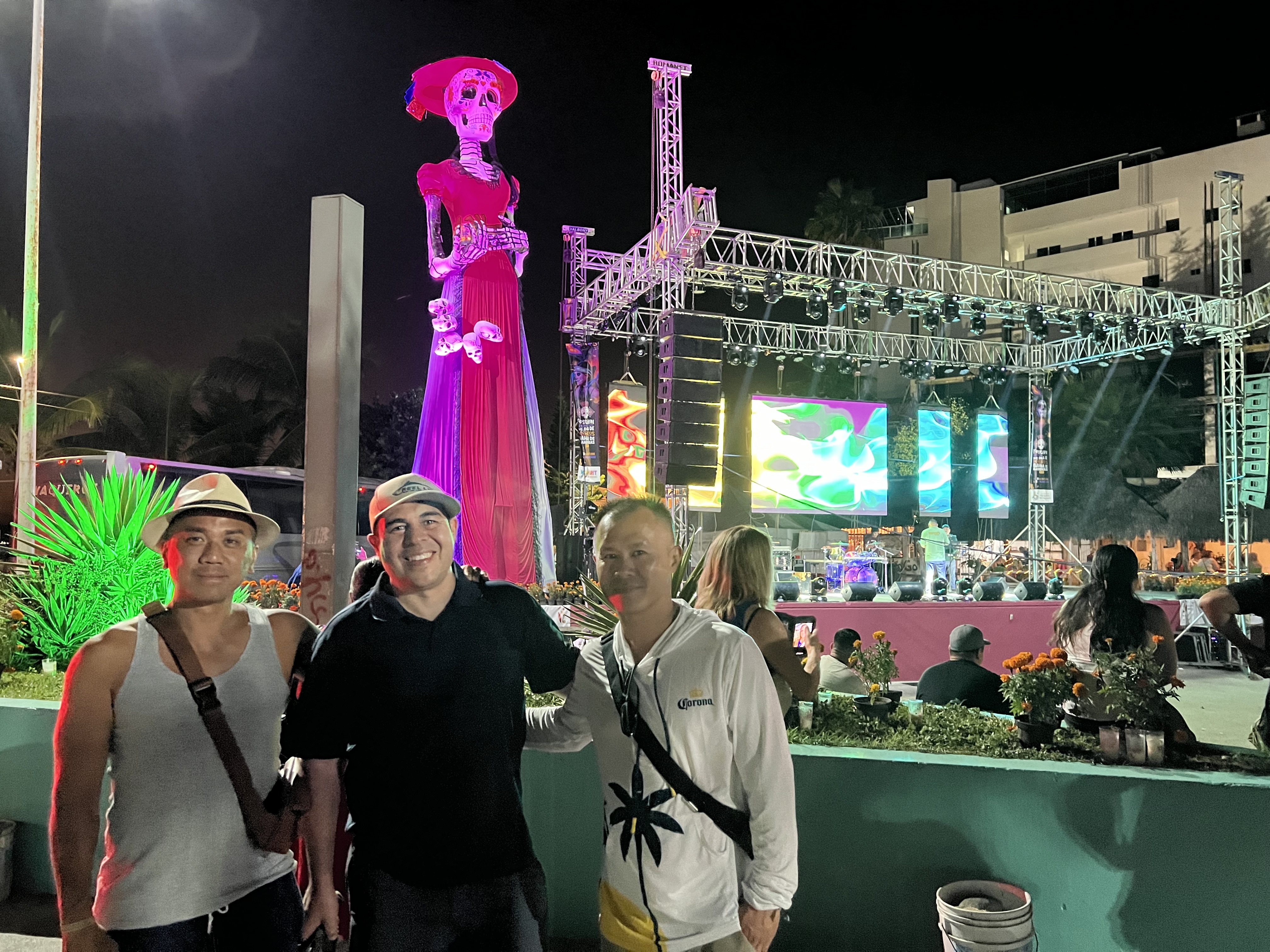
One of the first things you may notice in late October and early November is that Mexico seems to transform.
Markets fill with brilliant orange marigolds. Bakeries display pan de muerto, or “bread of the dead.” Families create beautifully decorated altars, known as ofrendas, with photographs, candles, flowers and favorite foods. Cemeteries become places of gathering, remembrance and even music.
And everywhere you look, you may see an elegant skeleton dressed in a beautiful gown, often wearing an elaborate hat and surrounded by flowers.
She is La Catrina.
For someone experiencing Mexico for the first time, Día de Muertos can seem mysterious. Why celebrate death with such color and joy? Who is La Catrina? And where did this uniquely Mexican tradition come from?
The answers reveal something important about Mexico: its culture is layered, complex and deeply connected to family, history and the idea that remembering those we love keeps them close.
What is Día de Muertos?
Día de Muertos, or Day of the Dead, is a traditional Mexican observance honoring deceased family members and loved ones.
Although it is often associated with October 31 through November 2, the traditions vary considerably from region to region and from family to family. In Puerto Vallarta and Riviera Nayarit, the celebrations start early, lasting 3 days or more with parades, parties & more. Last
For Mexico in general:
November 1 is generally associated with Día de Todos los Santos (All Saints' Day), while November 2 is Día de los Fieles Difuntos (Day of the Faithful Departed).
The modern celebration developed over centuries. It incorporates Catholic traditions brought to Mexico by the Spanish alongside older Indigenous beliefs and practices surrounding death, ancestors and remembrance.
It is therefore more accurate to think of Día de Muertos as a tradition that has evolved over hundreds of years, rather than as either purely Indigenous or simply a Catholic holiday. The Instituto Nacional de Antropología e Historia (INAH) notes that the November 1–2 observances themselves originated in medieval European Catholic tradition, while Indigenous communities in Mexico had their own longstanding and diverse traditions for honoring the dead.
Today, these traditions have become one of Mexico's most recognizable cultural expressions.
In 2008, UNESCO recognized the Indigenous festivities dedicated to the dead as part of the Intangible Cultural Heritage of Humanity. UNESCO describes the celebration as commemorating the temporary return of deceased relatives and loved ones to Earth.
Why is Día de Muertos so colorful?
One of the most beautiful aspects of Día de Muertos is that it doesn't treat death exclusively as something dark or frightening.
Instead, families often use color, flowers, food, music and personal memories to celebrate the lives of people who have passed away.
A traditional ofrenda, or altar, may include:
- Photographs of deceased family members
- Cempasúchil, the brilliant orange marigold traditionally associated with Día de Muertos
- Candles, representing light and guidance
- Pan de muerto, a sweet bread traditionally prepared for the occasion
- Favorite foods and drinks of the deceased
- Papel picado, intricately cut decorative paper
- Personal belongings or objects associated with the person being remembered
- Water and other offerings
In some communities, families also visit cemeteries to clean and decorate graves, share food and spend time remembering their loved ones.
The details are different throughout Mexico. There is no single Día de Muertos experience.
That regional diversity is part of what makes the tradition so fascinating.
So, who is La Catrina?
If you are visiting Mexico during Día de Muertos, one figure is almost impossible to miss: La Catrina.
She is usually represented as an elegantly dressed female skeleton, often wearing an elaborate hat decorated with flowers.
But La Catrina did not originally begin as a Día de Muertos character.
Her story begins with José Guadalupe Posada, a Mexican illustrator and printmaker from Aguascalientes who worked in the late 19th and early 20th centuries.
Posada created a famous engraving of a skeleton wearing an elaborate hat. He called the character La Calavera Garbancera. The image was a satire aimed at people who rejected their Indigenous heritage while attempting to adopt European fashions and social customs.
The message was sharp and humorous: beneath expensive clothing, social status and outward appearances, everyone is ultimately a skeleton.
This was characteristic of Posada's work. His calaveras appeared in newspapers and prints participating in ordinary human activities, making fun of politicians, social classes and the absurdities of everyday life.
How did La Calavera Garbancera become La Catrina?
This is where another famous Mexican artist enters the story: Diego Rivera.
Decades after Posada created the original image, Rivera incorporated the skeleton into his enormous 1947 mural, Sueño de una tarde dominical en la Alameda Central — Dream of a Sunday Afternoon in the Alameda Central.
Rivera transformed Posada's relatively simple skeletal figure by giving her an elaborate, elegant outfit and helped popularize the name La Catrina.
The elegant Catrina we recognize today is therefore largely the result of the combination of Posada's original satirical skeleton and Rivera's later artistic interpretation.
Over time, La Catrina became closely associated with Día de Muertos and evolved into one of Mexico's most recognizable cultural symbols.
What does La Catrina represent?
At its heart, La Catrina reminds us that death makes everyone equal.
Rich or poor. Powerful or powerless. Famous or unknown.
No matter how we dress or how much money we have, we all have the same destination.
That idea was particularly powerful in Posada's satirical work because it challenged social status and vanity. The skeleton could be dressed as an aristocrat, politician, worker or ordinary person — but underneath, everyone was the same.
Today, however, La Catrina has taken on a much broader meaning.
She represents Mexican creativity, humor and the country's distinctive relationship with death. She is simultaneously elegant, playful, beautiful and a little mischievous.
During Día de Muertos, you may see people dressed as Catrinas and Catrines, elaborate face painting inspired by skeletons, enormous Catrina sculptures and colorful parades.
What began as social satire has become a living cultural symbol.
Día de Muertos isn't Mexican Halloween
One of the most common misconceptions among people who are new to Mexico is that Día de Muertos is simply Mexico's version of Halloween.
It isn't.
Although the two holidays occur around the same time and both involve skeletons, costumes and the supernatural, their origins and purposes are different.
Halloween has its own historical development and traditions.
Día de Muertos is primarily about remembering and honoring people who have died.
The emphasis is not on being frightened by death. Instead, death becomes a reason to remember someone's personality, stories, favorite foods, sense of humor and place within the family.
In many Mexican families, talking about deceased relatives during this time is a way of keeping their memories alive.
A celebration that brings families together
Perhaps the most meaningful part of Día de Muertos isn't the decorations or the spectacular Catrina costumes.
It is the emphasis on family and memory.
A photograph on an altar represents someone who was once part of the family's everyday life. A favorite meal may be prepared because it reminds everyone of that person. Stories are told. Memories are shared.
In some communities, families spend hours or even days preparing cemeteries and altars.
The result is a tradition in which remembering the dead becomes a way of celebrating the living.
Experiencing Día de Muertos in Riviera Nayarit
If you live in or visit Puerto Vallarta, Bucerías, Nuevo Nayarit or Riviera Nayarit, Día de Muertos is a wonderful opportunity to experience another side of Mexican culture.
You may encounter decorated altars in plazas, businesses, restaurants and homes, as well as Catrina displays, face painting, cultural events and local celebrations.
One of the best ways to experience the holiday is simply to slow down and observe.
Look at the details in an ofrenda. Notice the photographs. Smell the marigolds. Try pan de muerto. Ask a Mexican friend or neighbor about the person being remembered.
You'll quickly discover that Día de Muertos isn't really about death.
It's about love that continues after someone is gone.
A tradition that helps explain Mexico
For those who are new to Mexico, Día de Muertos offers a wonderful introduction to the country's culture.
It demonstrates Mexico's ability to bring together history, Indigenous traditions, Catholicism, art, humor, family and community — and turn them into something uniquely its own.
And La Catrina captures much of that spirit.
She reminds us not to take ourselves too seriously. She reminds us that social status is temporary. And, perhaps most importantly, she reminds us to appreciate life while we have it.
So, when you see La Catrina this November, don't just see a colorful skeleton.
See the story behind her.
See the artist José Guadalupe Posada, the satire of Mexican society, the later interpretation by Diego Rivera and the generations of Mexicans who have transformed her into an enduring symbol of their culture.
Most of all, see the celebration for what it is:
A colorful reminder that the people we love remain part of our lives through the memories we keep alive.
Want to view more about Dia de Los Muertos and see when/ where the events are happening? Visit https://www.globalrealestatemexico.com/blog/dia-de-muertos-2026-events-in-puerto-vallarta-riviera-nayarit
Thinking about making Mexico part of your life?
At Global Real Estate México, we believe that buying property in Mexico is about much more than finding the right home. It is also about understanding the community, culture and lifestyle that make a place special.
If you are considering a home, vacation property or investment in Puerto Vallarta, Bucerías, Riviera Nayarit or the Bay of Banderas, our team is here to help you understand both the real estate market and the local lifestyle.
Discover Mexico. Understand the market. Find your place.

Freddy Ayotte
Managing Broker | Global Real Estate Mexico
or another way
Weather Data Source: Wetter vorhersage 30 tage